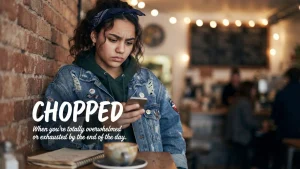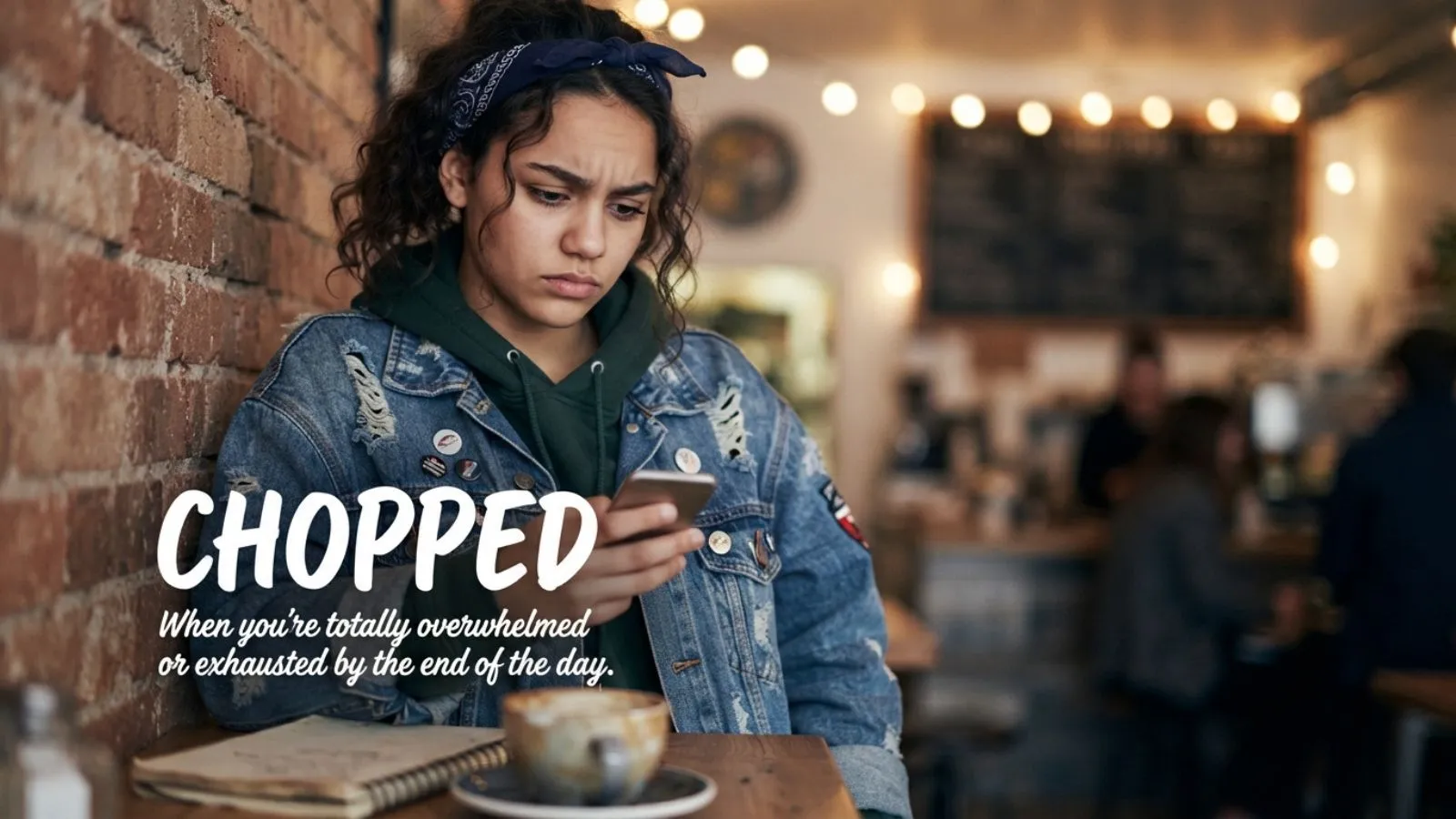
Scroll through TikTok or Instagram comments long enough and you’ll eventually see it: someone gets called chopped.
Not ugly, not mid chopped. It’s blunt, it’s dismissive, and by 2026 it’s become one of the most-used insults in Gen Z’s vocabulary, especially when aimed at how someone looks.
But where did this word come from, and why did it suddenly take over social media? Chopped didn’t start as internet slang at all; it has roots in African American Vernacular English and New York street culture dating back over a decade, long before memes turned it into a global punchline.
Today, chopped means far more than just unattractive. It’s used to roast outfits, haircuts, awkward social moments, and even entire vibes. And when it’s aimed specifically at a girl, it carries its own set of unspoken rules about what’s being judged.
Let’s break down exactly what chopped means, where it came from, and how it’s used.
What Does Chopped Mean?
At its core, chopped is slang for unattractive, awkward-looking, or simply undesirable. It’s a quick, no-nonsense way to pass judgment on someone’s appearance and it doesn’t come with much room for interpretation. If someone is chopped, the implication is clear: they don’t meet conventional beauty standards, at least not in the eyes of whoever’s doing the judging.
But the word has grown well beyond faces and bodies. Scroll through comment sections and you’ll see chopped applied to outfits (that fit is chopped), haircuts, cars, and even entire situations that didn’t go as planned. In that sense, it functions less like a narrow insult and more like an all-purpose stamp of disapproval, a sharper, more cutting version of saying something is not it.
Where does it rank among other appearance-based slang? Most people agree chopped hits harder than mid, which is used for something merely average or forgettable. It’s closer in weight to older terms like beat or busted, but with more cultural momentum behind it right now. Unlike a lot of internet slang that fades within a season, chopped has shown real staying power helped along by its flexibility. The same word can describe a bad selfie, a rejected DM, or an embarrassing public moment, which is part of why it spread so fast and why it’s stuck around instead of burning out like a typical viral phrase.
Literal vs. Slang Meaning
Before it became a go-to insult, chopped was just an ordinary English word with a handful of literal meanings. Inside cooking, it describes food cut into small pieces: chopped onions, chopped nuts, chopped salad. In film and video editing, chopped refers to footage that’s been cut down or scenes that were removed entirely. In music production, especially in hip-hop, chopped (as in chopped and screwed) describes audio that’s been sliced up, slowed down, and rearranged a completely different meaning from the appearance-based slang and one that predates it by decades.
So how did a word about cutting vegetables end up being used to rate how someone looks? The answer lies in the metaphor itself. To chop something is to cut it down, remove it, or reduce it and that idea translates naturally into social judgment. Being chopped isn’t about literally being cut; it’s about being cut down, dismissed, or deemed not good enough to make the cut in the first place.
That shift from a physical action to a social judgment is common in slang evolution, but it’s worth pointing out because it explains why the word feels so sharp. Unlike softer insults, chopped carries the weight of exclusion baked into its literal root. When someone calls a person or thing chopped, they’re essentially saying it didn’t survive the cut.
Origin and History
The slang use of chopped didn’t start on TikTok; it started decades earlier, in African American Vernacular English (AAVE), with specific ties to New York City street culture. Communities in the Bronx, Brooklyn, and Harlem used the term informally throughout the early 2010s to describe someone who looked rough, was disrespected, or simply didn’t measure up. Other early accounts trace parallel usage to New Jersey slang circles around the same period.
The word’s first documented appearance online came via Urban Dictionary on December 16, 2014, when a user defined it simply as a girl or boy that’s ugly. That definition sat quietly for years, circulating mostly within Black communities and NYC-adjacent slang before the wider internet caught on.
The real explosion happened between 2024 and 2026. A viral meme known as Chopped Chin referencing a receding or weak chin line spread rapidly across Instagram, X, and TikTok in early 2025, dragging the broader term chopped along with it. A photo of streamer Young Dabo, dubbed the Dabo Chopped Photo, added further fuel around the same time.
By 2026, the term had fully crossed into mainstream recognition: Merriam-Webster officially added chopped to its slang dictionary, and outlets like the New York Times covered the so-called chopped man epidemic as a cultural phenomenon. What began as niche AAVE slang had become one of the internet’s most recognizable insults.
Chopped for Girls vs. Guys
While chopped applies to anyone, what it’s actually judging tends to shift depending on who it’s aimed at.
When a girl is called chopped, the criticism usually zeroes in on a specific cluster of features: facial appearance, makeup, hairstyle, and fashion choices. It’s less about one single flaw and more about the overall package; the implication is that something about her look, styling, or presentation missed the mark by conventional social media beauty standards. A bad angle, an unflattering makeup look, or an outfit seen as unfashionable can all trigger the label.
When a guy is called chopped, the focus shifts elsewhere: hairline, facial symmetry, outfit choices, and notably confidence level. That last one is telling. For guys, chopped often carries a social or behavioral dimension on top of the physical one, tying attractiveness to how someone carries themselves, not just how they look in a photo.
This gendered split isn’t official or rigid; it’s more of an unspoken pattern that’s emerged from how the term gets used in comment sections and memes. But it matters for understanding tone: calling a girl chopped tends to read as a judgment on styling and presentation, while calling a guy chopped often folds in social standing and self-assurance alongside looks.
Either way, the underlying message is the same: a blunt, public verdict that someone didn’t meet the bar, delivered in a single word.
How It’s Used in Real Life
Chopped shows up everywhere from private texts to public comment sections, and the context usually makes the meaning obvious even without extra explanation.
In text messages and DMs, it’s often used to dismiss someone romantically or socially:
- He texted me again lol he’s so chopped → he’s unattractive or undesirable
- That fit is chopped ngl → the outfit looks bad
- She got chopped from the group → she was excluded or left out
On social media, the word thrives in comment sections under selfies, TikToks, and Instagram posts. Someone posts a photo, and a single comment reading chopped is enough to signal disapproval, no further explanation needed. It’s become a kind of shorthand judgment, similar to how L or ratio function as one-word verdicts online.
In dating contexts, the term gets used bluntly and often publicly. A screenshot of someone’s dating profile or a rejected match might get labeled chopped in group chats or comment threads, turning a private rejection into public commentary.
In group dynamics, being chopped can extend beyond looks entirely; someone can be socially chopped by being excluded from a friend group or conversation, showing how the word has stretched from a purely physical descriptor into a broader marker of social standing.
Across all these contexts, the common thread is bluntness. Chopped doesn’t soften the blow; it delivers judgment quickly and publicly, which is part of why it stings more than gentler slang.
Related Slang and Spinoffs
Like most viral slang, chopped didn’t stay static; it spawned variations and got tangled up with terms that sound similar but mean something entirely different.
Chuzz is one of the more notable spinoffs, a portmanteau blending chopped and huzz (itself slang derived from hoes, used more broadly and often controversially to refer to women). Chuzz functions as a shorthand insult, carrying the same dismissive energy as chopped but compressed into a single, punchier word.
Chop hoe is another derivative that emerged alongside it, specifically used to describe women in a derogatory way. Like much of this slang cluster, it leans harsh and is generally considered more offensive than chopped on its own.
Chopped and screwed deserves a clear callout because it’s unrelated to the appearance-based insult, despite sharing a word. This is a hip-hop production technique of slowing down and remixing tracks, pioneered in Houston’s rap scene decades before chopped became an appearance-based insult. Someone searching chopped meaning might stumble into music forums discussing chopped and screwed mixtapes, which has nothing to do with looks or social judgment.
This overlap is worth understanding because context clues matter: if chopped shows up next to talk of tempo, remixes, or DJs, it’s the music term. If it shows up in a comment section under a selfie, it’s an insult. Same word, completely different meaning, depending on where you encounter it.
Why It Went Viral / Why It Stuck
Plenty of slang terms spike for a few weeks and disappear. Chopped didn’t follow that pattern and the reasons why say a lot about how internet culture works in 2026.
The TikTok acceleration (2024–2026) was the biggest driver. The platform’s algorithm rewards short, punchy, endlessly remixable content, and chopped fits perfectly: it’s one word, instantly understood, and works as a caption, a comment, or a meme format all on its own. The Chopped Chin meme in particular gave the term a visual hook something people could point to, react to, and duet which turbocharged its spread far beyond niche slang circles.
High-profile moments accelerated it further. A viral WNBA moment in early 2026 pushed chopped into mainstream sports commentary and casual conversation, well outside its original online spaces. Around the same time, coverage of the so-called chopped man epidemic including attention from major outlets like the New York Times signaled that the term had crossed from internet slang into recognized cultural phenomenon.
Its versatility is arguably the real reason it stuck. Unlike slang that’s locked to one specific meaning, chopped flexes to cover looks, failed jokes, social rejection, and general bad vibes all with a single word. That flexibility means it never feels stale or overused in one context, because it keeps finding new ones. Merriam-Webster’s official addition of the term in 2026 cemented what was already obvious: chopped wasn’t a passing trend, it was here to stay.
Cultural Impact and Criticism
As chopped spread from niche slang into mainstream vocabulary, it also picked up a fair amount of controversy and not everyone thinks the trend is harmless fun.
The case for it being lighthearted:
Supporters argue chopped is just another entry in a long line of internet slang used for jokes, self-deprecation, and playful roasting between friends. Plenty of people use it about themselves (I’m so chopped today) as a way to laugh off a bad hair day or an unflattering photo, treating it more like a punchline than a real insult.
The case for concern:
Critics point out that chopped is, at its core, an appearance-based judgment delivered publicly and often anonymously in comment sections. For teens and young people already navigating heavy social media pressure, being labeled chopped sometimes by strangers, sometimes by peers can sting in ways that go beyond a joke. Because the term is so blunt and requires zero explanation, it can feel more brutal than older insults that at least offered some specificity.
The bigger picture:
This tension isn’t unique to chopped ; it echoes debates around other appearance-based slang before it, like mid or basic. What makes chopped notable is how quickly and widely it spread, putting a sharp-edged insult into casual, everyday use across millions of accounts almost overnight.
The takeaway isn’t to police how people talk online, but to stay aware that words with this much reach can land harder than intended, especially for younger audiences still figuring out how to handle public judgment.
FAQs
1. What does chopped mean in slang?
Chopped means unattractive, undesirable, or not meeting conventional standards. It’s typically used to describe someone’s appearance but has expanded to cover outfits, haircuts, social situations, and general vibes.
2. Where did the term chopped come from?
Chopped originated in African American Vernacular English (AAVE), with roots tied to New York City and New Jersey street culture in the early 2010s. It was first documented on Urban Dictionary in December 2014 before going viral on TikTok between 2024 and 2026.
3. What does it mean when a girl is called chopped?
When aimed at a girl, chopped usually refers to her facial appearance, makeup, hairstyle, or fashion choices, essentially a judgment on her overall look or styling rather than one specific feature.
4. Is chopped the same as chopped and screwed?
No. Chopped and screwed is an unrelated hip-hop production technique involving slowed-down, remixed audio, popularised in Houston’s rap scene decades before chopped became a slang insult about appearance.
Conclusion:
Chopped is a good example of how internet slang actually moves not from nowhere, but from real communities, real history, and years of quiet circulation before the wider internet ever catches on.
What started as AAVE slang rooted in New York street culture spent nearly a decade in relative obscurity before memes, TikTok, and a few viral moments turned it into one of the most recognizable insults of 2026.

I’m Maya Angelou, the creator behind EmojiAura.com, where I explore emoji meanings, social media trends, and fun digital expressions. I’m passionate about helping people understand the real meaning behind emojis and use them creatively in chats, captions, posts, and everyday online conversations.