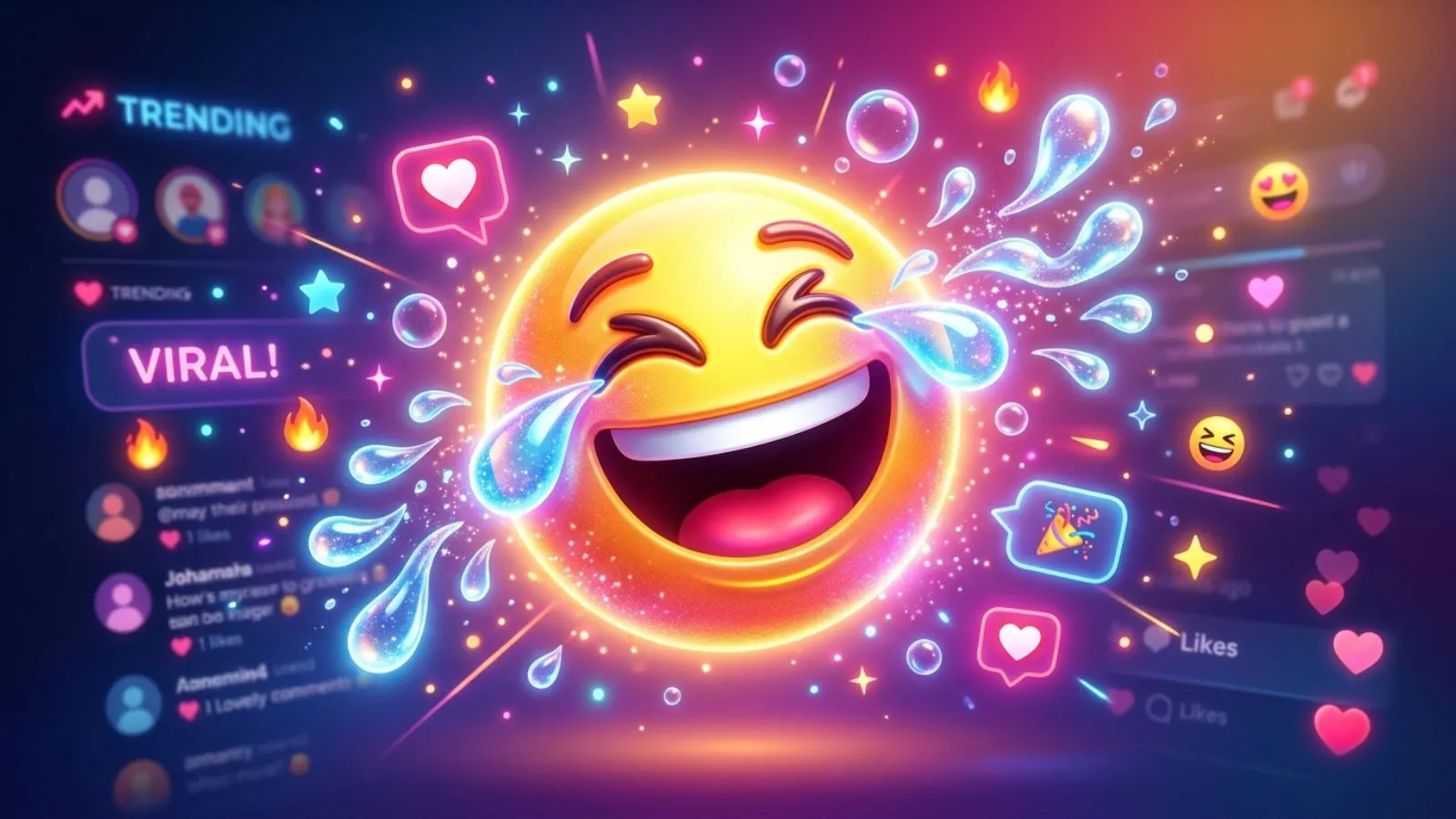
One emoji, endless laughter little face has ruled online conversations for years and still dominates 2026 trends.
When words aren’t enough, the extreme laugh emoji says it all.
If you’re reacting to a funny meme or a hilarious text, the 😂 almost laughing emoji instantly shows that something made you laugh hard.
You’ve probably used it when something was too funny to type out, or when a meme hit way too close to home.
But interestingly, its meaning, usage, and even popularity have evolved over time making it more than just a simple reaction emoji.
Let’s break it all down in a simple, SEO-friendly, and real-world way.
Laughing Emojis and Their Meaning 😂🤣😆
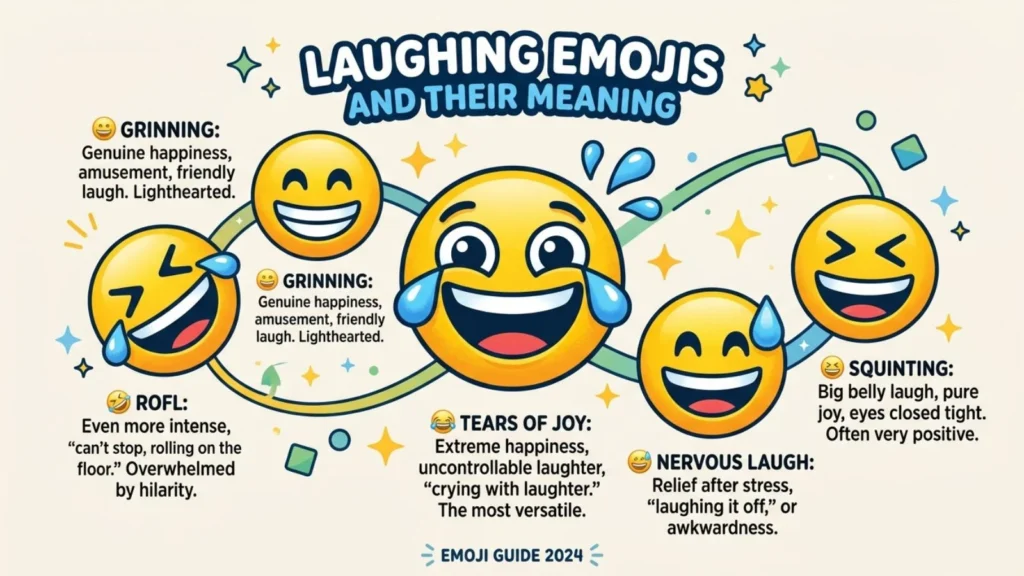
Laughing emojis help people express different levels of humor, amusement, and joy in digital conversations. While they all relate to laughter, each emoji carries a slightly different meaning and emotion.
Common laughing emojis and their meanings include:
- 😂 Face with Tears of Joy — Used when something is extremely funny and makes you laugh so hard that you cry.
- 🤣 Rolling on the Floor Laughing — Represents uncontrollable laughter or finding something hilariously funny.
- 😆 Grinning Squinting Face — Shows cheerful laughter, excitement, and amusement.
- 😹 Cat Face with Tears of Joy — A playful version of 😂, often used by cat lovers and in cute conversations.
- 😄 Grinning Face with Smiling Eyes — Expresses happiness, friendliness, and light-hearted laughter.
- 😅 Grinning Face with Sweat — Used when something is funny but also slightly awkward or embarrassing.
- 🤭 Face with Hand Over Mouth — Indicates giggling, trying not to laugh, or finding something amusing.
- 😁 Beaming Face with Smiling Eyes — Shows big smiles, joy, and positive excitement.
Quick Emoji Meaning Table
| Emoji | Meaning |
|---|---|
| 😂 | Laughing so hard you’re crying |
| 🤣 | Rolling with laughter |
| 😆 | Happy, excited laughter |
| 😹 | Cute or playful laughter |
| 😄 | Cheerful smile and laughter |
| 😅 | Nervous or awkward laughter |
| 🤭 | Giggling or holding back laughter |
| 😁 | Big joyful smile |
These laughing emojis are commonly used on Instagram, TikTok, WhatsApp, Snapchat, and other social media platforms to react to jokes, memes, funny videos, and entertaining conversations.
What does laughing emoji mean?
The 😂 laughing emoji officially represents “Face with Tears of Joy.” It is used to show extreme laughter, humor, or something so funny that it brings tears to your eyes.
In real conversations, it can mean:
- Something is extremely funny
- You’re laughing uncontrollably
- A joke or meme is hilarious
- Light sarcasm or playful teasing
👉 Example:
“Bro slipped on banana peel 😂😂 I can’t breathe”
Today, it’s also used slightly differently depending on context—sometimes even to soften awkward or embarrassing moments.
How to Use Laughing Emoji emojis
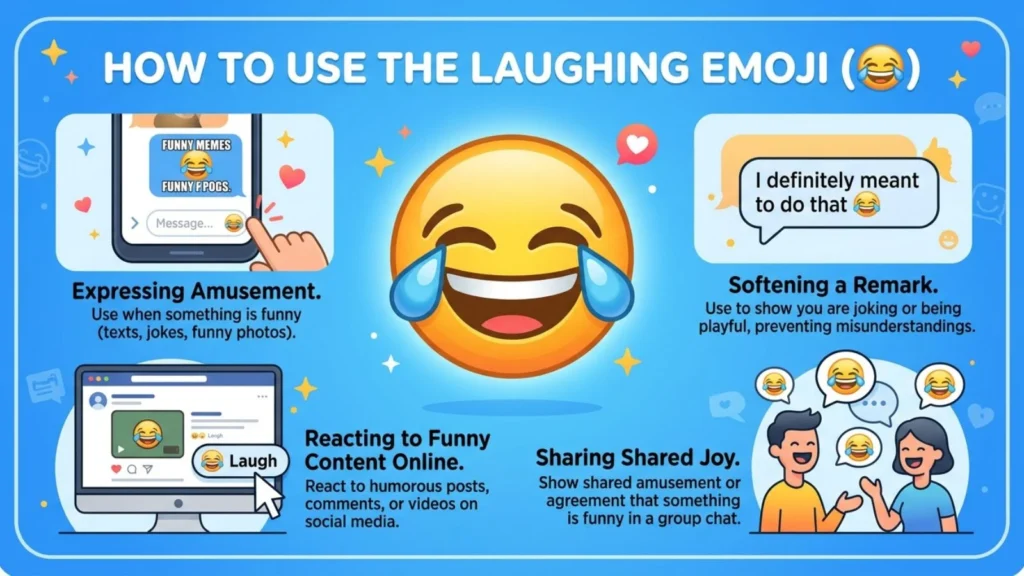
The 😂 laughing emoji is super flexible and fits almost any casual conversation.
You can use it:
- In WhatsApp chats to react to jokes
- In Instagram comments on memes
- In TikTok captions or replies
- In Snapchat streak reactions
- To make messages feel more friendly and fun
👉 Example uses:
- “That exam question was impossible 😂”
- “You really said that? 😂😂”
- “I’m done, this is too funny 😂”
💡 Tip: One emoji is casual, but multiple 😂😂😂 increases emotional intensity.
Best emoji combinations for copy paste
Here are the most viral and aesthetic emoji combos featuring 😂:
| Emotion | Emoji Combo |
|---|---|
| Extreme laughter | 😂😂😂😂 |
| Funny + shock | 😂😳💀 |
| Meme reaction | 😂🤣😭 |
| Sarcastic laugh | 😂🙃 |
| Friendly joke | 😂👍 |
| Viral caption style | 😂✨🔥 |
Copy-paste ready:
😂😂😂😂 meaning💀🤣🔥😳🙃✨
Aesthetic Laughing Emoji Social Media
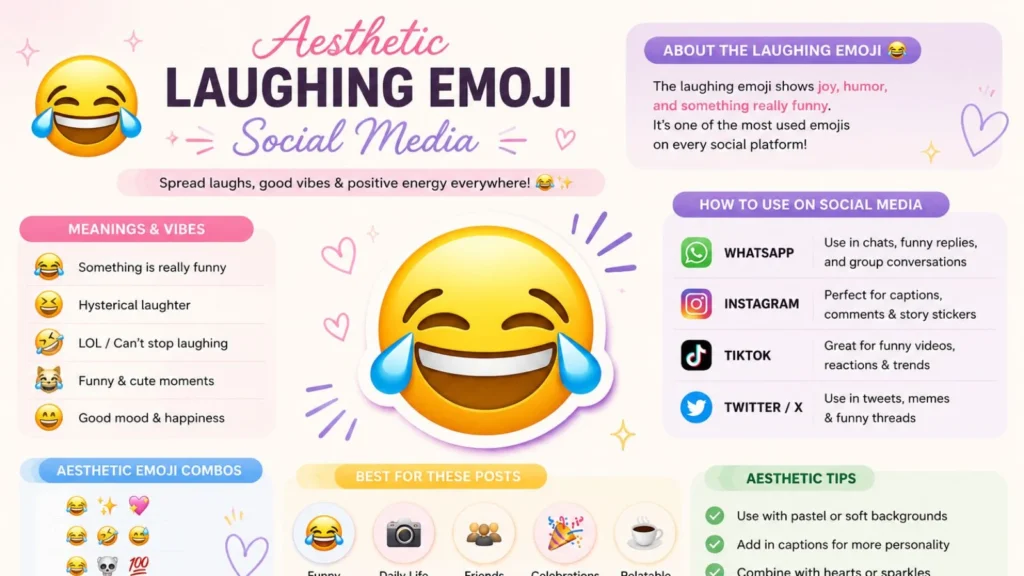
On Instagram and TikTok, “what is the meaning of this emoji” 😂 is often used to create expressive and relatable captions.
Here are aesthetic styles:
- “POV: life is chaos 😂✨”
- “Me pretending I’m okay 😂💔”
- “That one friend who never stops joking 😂🔥”
- “I said I’m fine… I’m not 😂😭”
💡 Trend Tip 2026: Users now mix 😂 with aesthetic symbols like ✨💫🫶 to make captions more engaging and visually appealing.
Common problems and solutions
Many users get confused when using the 😂 laughing emoji. Here’s a quick fix guide:
| Problem | Solution |
|---|---|
| Emoji not showing correctly | Update keyboard or app |
| Looks different on devices | Normal—each OS styles emojis differently |
| Misunderstood tone | Add text context for clarity |
| Overuse looks spammy | Limit to 1–3 emojis per message |
👉 Remember: Tone matters more than quantity.
Trending Laughing Emoji Usage in 2026
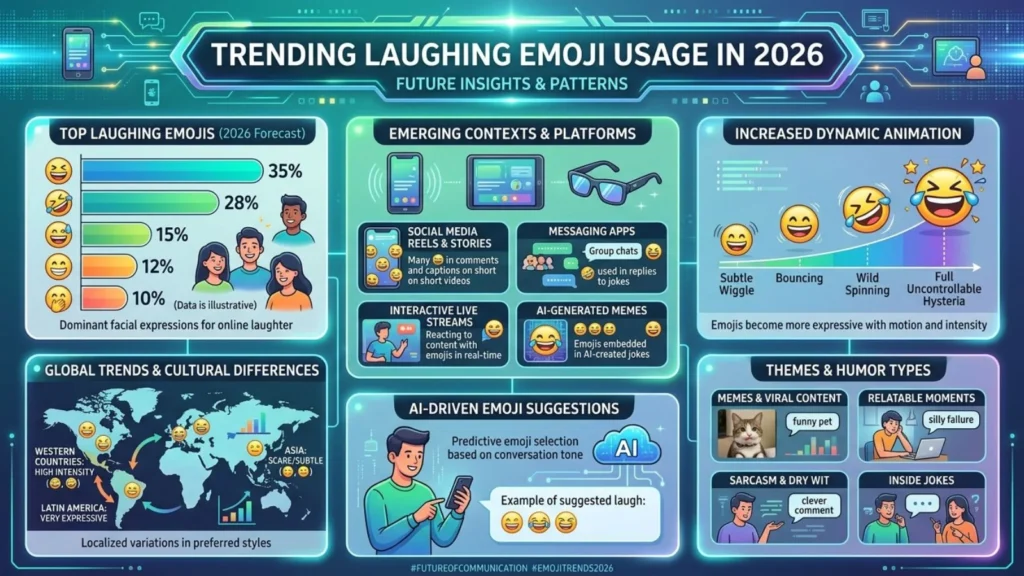
In 2026, emoji communication has evolved. The 😂 laughing emoji is still popular but used more selectively.
Current trends:
- Less overuse in formal chats
- More combined with 💀 for “I’m dead laughing”
- Used in meme culture and short-form content
- Replaced sometimes by newer slang emojis like 😭 (cry-laugh hybrid tone)
👉 Viral pattern:
😂 + 💀 = “I can’t stop laughing”
Despite new trends, the laughing emoji remains a timeless internet classic.
FAQs About Laughing Emoji
1. What does 😂 mean?
It means something is extremely funny or hilarious.
2. Is 😂 still popular in 2026?
Yes, but it’s often mixed with newer emojis like 💀 and 😭.
3. Can 😂 mean sarcasm?
Yes, it is often used in sarcastic or playful messages.
4. Why do people use multiple 😂 emojis?
To show stronger laughter or emotional reaction.
5. Is 😂 appropriate for formal chats?
No, it’s best for casual conversations only.
Conclusion:
The 😂 Laughing Emoji remains one of the most powerful expressions of humor in digital communication. Even in 2026, it continues to connect people across chats, comments, and social media platforms by instantly conveying laughter without words.
If you’re reacting to a funny meme, teasing a friend, or sharing a lighthearted moment, this emoji adds emotion and personality to your message.
However, its meaning can slightly change depending on context sometimes showing genuine laughter, other times sarcasm or awkward amusement.
That’s why understanding how and when to use it is important for effective communication. From WhatsApp conversations to viral TikTok captions, the 😂 laughing emoji remains a timeless part of online culture.
As trends evolve, its usage may shift, but its core purpose expressing joy and humor will always stay relevant. In short, it’s not just an emoji, it’s a universal language of laughter.
Discover More Posts!
- 87+ Star Emoji ⭐ Meaning in 2026: Everything You Need to Know
- 95+ Poop Emoji 💩 Hidden Meanings You Didn’t Know in 2026
- 99+ Angry Emoji 😡 Meaning: What It Really Says in Chats & Social Media