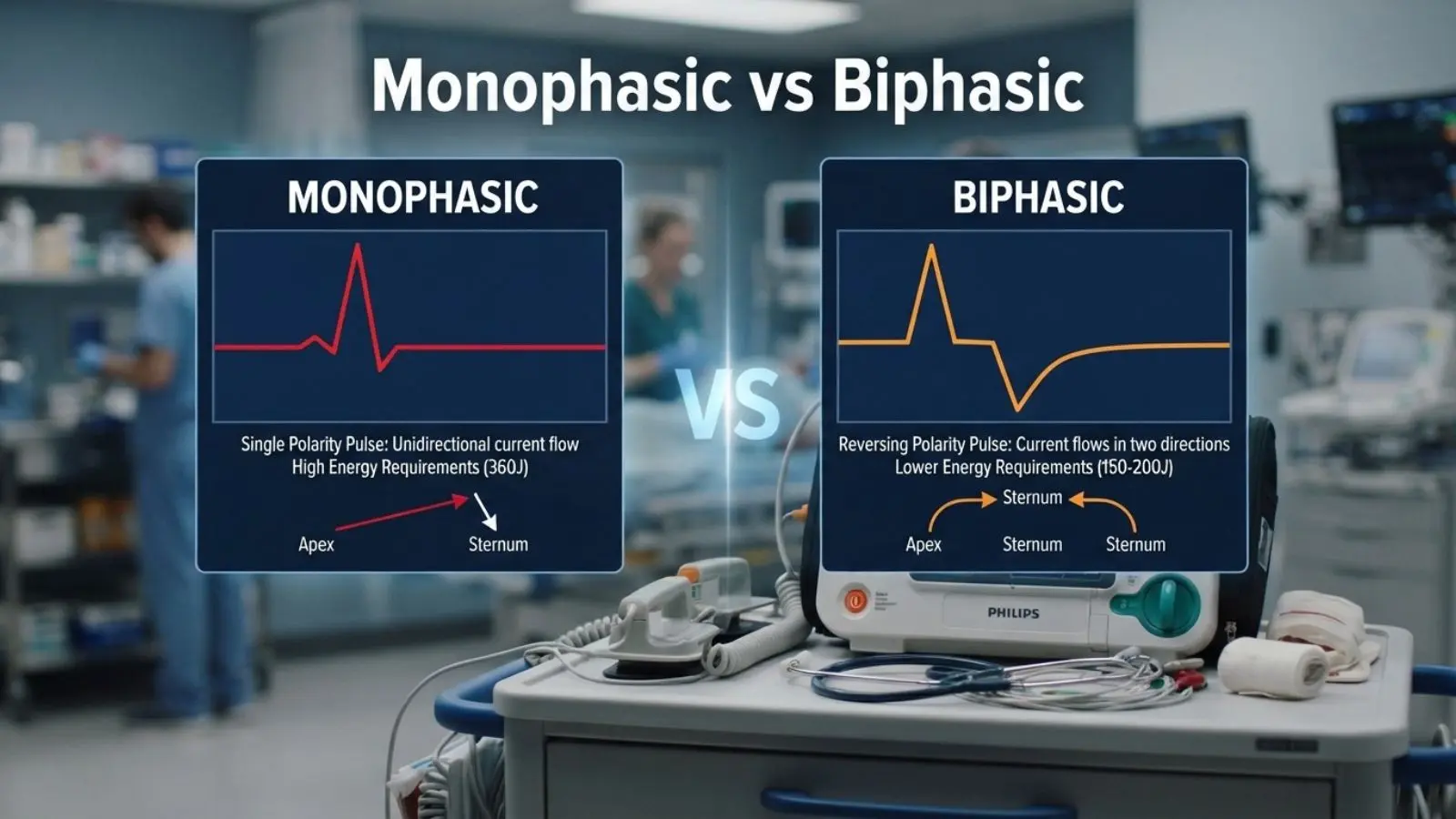
Monophasic vs biphasic describes two types of electrical waveforms used in defibrillation. A monophasic waveform sends current in one direction, while a biphasic waveform reverses the current direction during the shock.
Modern guidelines prefer biphasic defibrillation for adults because it can terminate dangerous tachyarrhythmias effectively with lower peak current than traditional monophasic waveforms.
Key Takeaways
- Monophasic shocks send electrical current in one direction.
- Biphasic shocks reverse the current direction during the same electrical pulse.
- Biphasic defibrillation is generally preferred in current adult cardiac-arrest guidelines.
- Shock energy depends on the specific defibrillator and waveform; it should follow manufacturer recommendations.
- “Monophasic vs biphasic” can also describe different oral contraceptive formulations, which has a separate meaning.
What Does Monophasic vs Biphasic Mean?
The terms monophasic and biphasic describe the pattern of electrical current delivered by a defibrillator.
In a monophasic waveform, electrical current travels through the patient in one direction for the duration of the shock.
In a biphasic waveform, the current initially travels in one direction and then reverses polarity before the pulse ends. The American Heart Association describes biphasic defibrillators as delivering pulses of opposite polarity.
The distinction matters because defibrillation is designed to interrupt abnormal electrical activity such as ventricular fibrillation (VF) or pulseless ventricular tachycardia (pVT).
The waveform is only one part of successful defibrillation. Pad placement, pad-skin contact, transthoracic impedance, CPR quality, timing, and the selected energy level also matter.
Monophasic vs Biphasic: Quick Comparison
| Feature | Monophasic | Biphasic |
| Current direction | One direction | Reverses direction |
| Polarity | Single polarity | Two polarities |
| Defibrillation technology | Older technology | Modern standard |
| Peak current | Generally higher | Generally lower |
| Clinical use today | Limited/older equipment | Widely used |
| Current AHA preference | Not preferred when biphasic is available | Preferred for adults |
| Energy setting | Often 360 J in adult cardiac arrest | Manufacturer-specific, commonly 120–200 J initially |
The energy figures should not be treated as interchangeable settings for every device. The 2025 AHA algorithm lists 360 J for monophasic defibrillation and a manufacturer-recommended initial dose for biphasic devices, such as 120–200 J.
What Is a Monophasic Waveform?
A monophasic waveform delivers electrical current in a single direction.
Older defibrillators commonly used monophasic technology. During a monophasic shock, the electrical pulse travels from one electrode toward the other without reversing direction during the pulse.
The goal remains the same: temporarily depolarize enough cardiac muscle to interrupt an abnormal rhythm and give the heart’s normal electrical system an opportunity to reestablish an organized rhythm.
Monophasic technology can still be effective. However, it generally requires higher electrical output than modern biphasic systems.
The 2025 AHA guidelines state that both waveform types can be used for tachyarrhythmias requiring a shock, but specifically recommend biphasic waveform defibrillation over monophasic waveform defibrillation for adults.
How Monophasic Defibrillation Works
A simplified example is:
Electrode A → heart → Electrode B
The electrical current moves in one direction throughout the waveform.
Traditional monophasic defibrillation may use substantially higher energy than biphasic systems. The current AHA adult cardiac-arrest algorithm specifies 360 J for monophasic defibrillation when that technology is being used.
What Is a Biphasic Waveform?
A biphasic waveform sends current in one direction and then reverses its direction during the same shock.
A simplified representation is:
Phase 1: Electrode A → heart → Electrode B
Phase 2: Electrode B → heart → Electrode A
This reversal is the defining feature of a biphasic waveform.
Biphasic technology became widely adopted because it can provide effective defibrillation with lower peak current than traditional monophasic systems. The AHA notes that biphasic devices expose patients to much lower peak electric current while providing equivalent or greater efficacy for terminating atrial and ventricular tachyarrhythmias.
How Biphasic Defibrillation Works
The first phase begins with an electrical shock. The second phase reverses polarity.
The exact shape and timing of those phases vary between devices. Examples include rectilinear biphasic and truncated exponential biphasic waveforms.
The AHA notes that there is not conclusive evidence that one biphasic waveform is superior to another, so energy settings should follow the manufacturer’s recommendations for the specific device.
Monophasic vs Biphasic: Key Differences
Direction of Current
The easiest difference to remember is direction.
Monophasic: current moves in one direction.
Biphasic: current changes direction during the shock.
That polarity reversal is why the term “bi-phasic” is used.
Energy and Current Requirements
Biphasic systems can achieve effective defibrillation with lower peak current than traditional monophasic systems.
In one randomized multicenter study, a rectilinear biphasic waveform achieved a 99% first-shock efficacy compared with 93% for the tested monophasic waveform, while using substantially less delivered current.
However, that study should not be interpreted as meaning every biphasic device uses the same energy or that every patient will respond identically.
Defibrillation Effectiveness
Research has generally supported the effectiveness of biphasic waveforms for terminating shockable rhythms.
A clinical comparison found greater first-shock efficacy with a tested biphasic waveform than with the tested monophasic waveform.
At the same time, evidence about outcomes such as survival is more complicated. A Cochrane review of out-of-hospital cardiac arrest trials found uncertainty about whether biphasic waveforms produced an important improvement in survival outcomes compared with monophasic waveforms.
This distinction is important: terminating an abnormal rhythm is not exactly the same as improving overall survival.
Current Clinical Use
Biphasic defibrillators have largely replaced monophasic devices in modern clinical practice. The 2025 AHA guidelines state that monophasic devices were last commercially manufactured in the late 1990s, although some may still be in use.
Why Is Biphasic Defibrillation Preferred?
The current AHA adult advanced life-support guidelines give biphasic defibrillation a preference over monophasic defibrillation for tachyarrhythmias requiring a shock.
Several factors explain this preference.
First, biphasic waveforms can terminate arrhythmias effectively with lower peak current.
Second, clinical research has demonstrated strong first-shock performance with several biphasic technologies.
Third, biphasic technology is now the standard technology incorporated into modern defibrillators and AEDs.
The preference does not mean the waveform alone determines the outcome. Rapid recognition, high-quality CPR, appropriate pad placement, and timely defibrillation remain critical parts of cardiac-arrest care.
What Energy Is Used for Monophasic vs Biphasic Defibrillation?
There is no single universal energy number for every defibrillator.
For adult cardiac arrest, the 2025 AHA algorithm specifies:
- Biphasic: use the manufacturer’s recommended dose, such as an initial 120–200 J; if unknown, use the maximum available dose.
- Monophasic: 360 J.
For biphasic devices, different manufacturers can use different waveform characteristics and energy settings. The AHA therefore recommends following the specific manufacturer’s instructions.
Energy selection for cardioversion of specific rhythms, such as atrial fibrillation, is a different clinical situation and should not be confused with the adult cardiac-arrest algorithm.
Are AEDs Monophasic or Biphasic?
Most modern AEDs use biphasic waveforms.
Biphasic technology has become common because it provides effective defibrillation while generally requiring lower peak current than older monophasic systems. The AHA states that biphasic defibrillators have largely replaced monophasic shock defibrillators.
If you are using an AED during an emergency, follow the device’s voice prompts and instructions rather than trying to manually select waveform characteristics.
Does Biphasic Defibrillation Improve Survival?
This question needs some nuance.
Biphasic defibrillation is preferred because of its effectiveness and electrical characteristics, but a more effective waveform does not automatically mean a guaranteed improvement in survival.
For example, a Cochrane review examining biphasic versus monophasic defibrillation in out-of-hospital cardiac arrest found that the available trials did not establish a statistically significant reduction in death before hospital admission or hospital discharge.
Survival after cardiac arrest depends on many factors, including how quickly CPR begins, how quickly a shock is delivered when indicated, the underlying cause of the arrest, and the quality of post-arrest care.
Monophasic vs Biphasic in Birth Control
There is a second medical meaning of monophasic vs biphasic that relates to oral contraceptive pills.
A monophasic birth-control pill provides the same hormone dose in each active pill, while a biphasic pill changes the hormone dosage during the active-pill portion of the cycle.
This meaning is separate from electrical defibrillation.
A Cochrane review found limited evidence directly comparing biphasic and monophasic oral contraceptives and reported no important difference in bleeding patterns in the one qualifying trial, while noting limitations in the evidence.
Therefore, when someone searches “monophasic vs biphasic,” context matters. In current search results, the defibrillation/waveform meaning is prominent, but contraception is another legitimate interpretation.
Frequently Asked Questions
Is biphasic better than monophasic?
For adult defibrillation, the 2025 American Heart Association guidelines prefer biphasic waveform defibrillation over monophasic waveform defibrillation for tachyarrhythmias requiring a shock. Biphasic systems can provide effective defibrillation with lower peak current, although overall outcomes depend on many other aspects of resuscitation.
What is the main difference between the two waveforms?
The main difference is the direction of current. Monophasic current travels in one direction during the shock, whereas biphasic current reverses direction during the shock. This reversal is the defining characteristic of a biphasic waveform.
Are modern defibrillators biphasic?
Yes. Biphasic technology is now the predominant type used in modern defibrillators. The AHA notes that biphasic defibrillators have largely replaced monophasic devices, although some older monophasic equipment may still be in use.
Does biphasic mean a lower-energy shock?
Not necessarily in every situation. Biphasic technology generally permits effective defibrillation at lower energy or peak current than traditional monophasic technology, but the appropriate setting depends on the device, waveform, rhythm, and clinical situation. Follow the manufacturer’s recommended settings.
Conclusion:
Understanding Monophasic vs Biphasic mainly comes down to the direction of electrical current.
Monophasic waveforms deliver current in one direction, while biphasic waveforms reverse the current during the shock.
Biphasic technology has become the modern standard for defibrillation, and the 2025 AHA guidelines prefer biphasic waveforms for adult tachyarrhythmias requiring defibrillation.
The term can also describe different oral contraceptive formulations, so context is important. For any real emergency involving cardiac arrest, follow established CPR/AED procedures and the instructions of the available defibrillator.