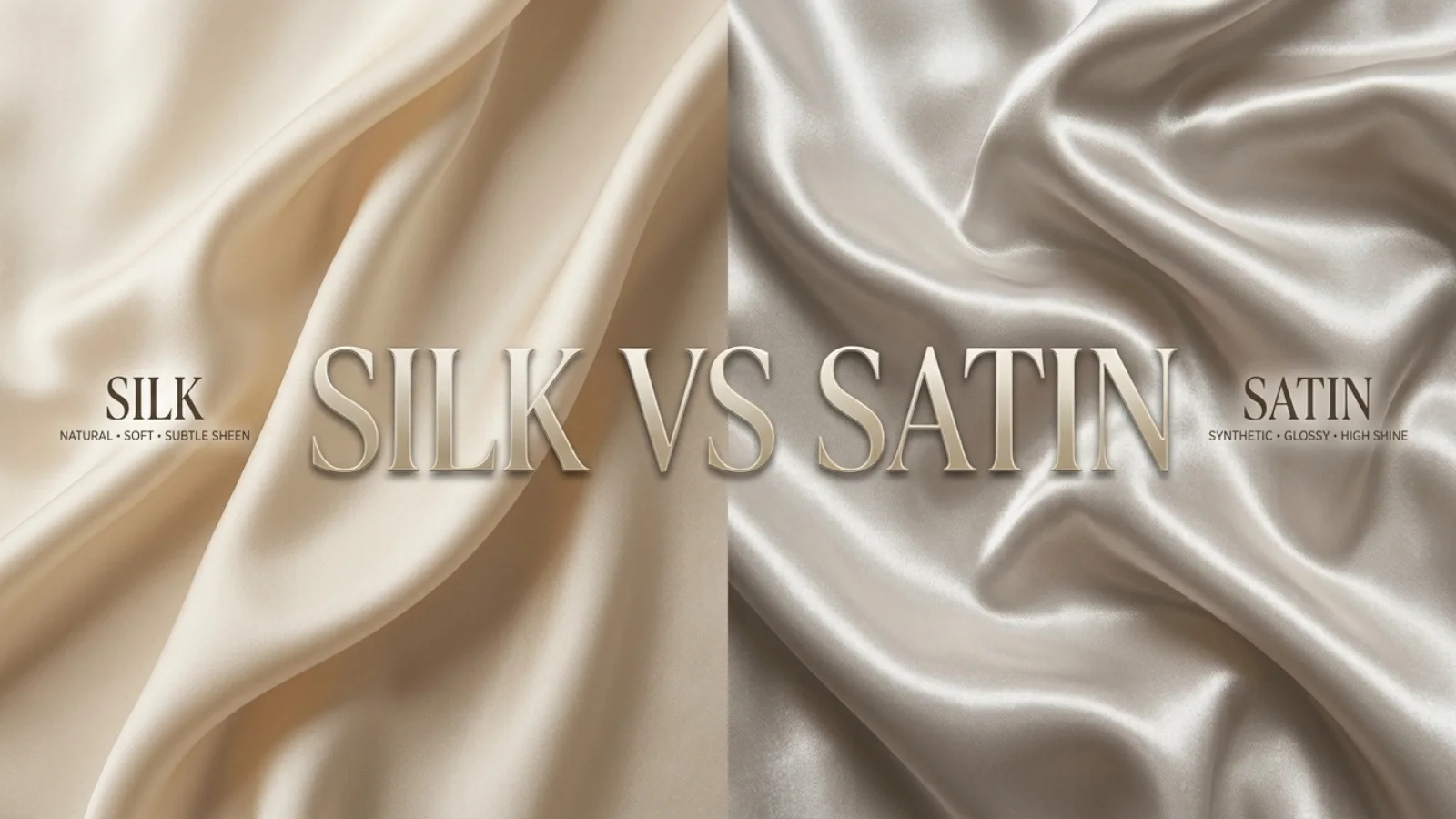
Silk vs satin comes down to fiber versus weave. Silk is a natural protein fiber produced by silkworms, while satin is a weave structure that creates a smooth, glossy surface. Satin can be made from silk, polyester, nylon, or other fibers.
Therefore, silk is usually more breathable and luxurious, while synthetic satin is often less expensive and easier to maintain.
Key Takeaways
- Silk is a natural fiber; satin is a weave.
- Satin can be made with silk, but many satin products use synthetic fibers such as polyester.
- Silk generally offers better breathability and a more natural feel.
- Synthetic satin is usually more affordable and easier to care for.
- For hair and skin, both can provide a smooth, low-friction surface.
- The best choice depends on your budget, intended use, comfort preferences, and care routine.
Silk vs Satin: What Is the Difference?
The biggest source of confusion is that silk and satin describe different things.
Silk refers to the material itself. It is a natural protein fiber produced by silkworms. Satin, on the other hand, describes a particular weaving structure that produces a smooth and lustrous surface.
That means a fabric can actually be silk satin. In that case, the material is silk and the construction is satin.
Satin can also be made using synthetic fibers. This is why two products labeled “silk” and “satin” may have noticeably different prices, textures, breathability, and care requirements.
What Is Silk?
Silk is a natural protein fiber made from silkworm cocoons. It has long been valued for its softness, smooth texture, natural sheen, and luxurious feel.
Its properties can vary depending on the type of silk and how it is woven. Silk is used in clothing, scarves, bedding, pillowcases, lingerie, and other premium textiles.
Silk is also relatively breathable, which can make it comfortable when used against the skin or as bedding. Sleep Foundation notes that silk pillowcases are particularly valued for their smooth feel and breathability.
What Is Satin?
Satin is a weave rather than a single fiber. The weave uses relatively long floats, meaning threads pass over several other threads before interlacing. This construction creates satin’s characteristic smooth and shiny face.
Because satin describes construction, its final characteristics depend heavily on the fiber used.
For example, silk satin and polyester satin may look similar from a distance but feel different against the skin. They can also differ in breathability, price, durability, and care requirements.
Silk vs Satin Comparison Table
| Feature | Silk | Satin |
| What it is | Natural protein fiber | Weave structure |
| Common materials | Silk fiber | Silk, polyester, nylon, rayon, and blends |
| Feel | Smooth, soft, natural | Smooth, slippery, often glossier |
| Appearance | Soft, natural sheen | Usually more reflective shine |
| Breathability | Generally high | Depends on fiber; synthetic satin can be less breathable |
| Price | Usually higher | Often lower when synthetic |
| Care | Requires more careful handling | Synthetic versions are often easier to maintain |
| Hair use | Smooth and low-friction | Smooth and low-friction |
| Skin use | Soft and breathable | Smooth, but performance varies by fiber |
| Best for | Luxury, comfort, premium clothing and bedding | Affordable luxury look and easy-care products |
The most important point is that “satin” alone does not tell you what fiber the product contains. Check the fiber-content label before comparing products.
Silk vs Satin: Feel, Appearance, and Breathability
Both fabrics can have a smooth, luxurious appearance, but the experience is not always identical.
Silk tends to have a softer, more natural hand feel. Its sheen can look less uniformly reflective than synthetic satin, depending on the weave and finish.
Satin is known for its smooth and lustrous surface. CottonWorks explains that the long floats in satin construction create the weave’s characteristic smooth appearance and excellent drape.
Breathability is more complicated because satin is not a specific fiber. A silk satin fabric can have properties closer to other silk products, while polyester satin will behave differently.
This is why comparing 100% silk with polyester satin is more useful for shoppers than treating all satin as one material.
Silk vs Satin for Hair and Skin
Silk and satin are especially popular in pillowcases because their smooth surfaces can create less friction than rougher fabrics.
Which Is Better for Hair?
Both silk and satin can be useful if your goal is to reduce friction while sleeping.
A smooth pillowcase allows hair to move more easily across the surface. Sleep Foundation notes that both silk and satin pillowcases are popular for their smooth feel and potential benefits for hair and skin.
Silk has an advantage if you also value breathability and a natural fiber. Satin can be the practical choice if you want a similar smooth surface at a lower price.
However, neither fabric should be treated as a guaranteed solution for hair problems. Hair type, nighttime habits, moisture, styling products, and overall hair care also matter.
Which Is Better for Skin?
Silk is often preferred by shoppers who want a soft, breathable material against the face.
Satin can also provide a smooth surface with less friction than many traditional bedding fabrics. However, the result depends on what fiber is used to make the satin.
For either option, keeping the pillowcase clean is important. A premium fabric does not replace basic skin-care and bedding hygiene.
Silk vs Satin for Clothing and Dresses
Both fabrics are common in dresses, blouses, skirts, lingerie, and formalwear.
Silk is popular when designers want a natural luxury feel, fluid movement, and breathability. Satin is popular when a designer wants a glossy finish and a particular type of drape.
A key detail is that silk satin combines both characteristics.
For example, a formal dress can be made from silk satin, giving it both a satin weave and a silk fiber. Polyester satin can create a similar visual effect at a lower material cost. Recent bridal fabric guides similarly emphasize that satin may be made from silk, polyester, or blends.
For a wedding or formal dress, consider:
- How breathable the fabric needs to be
- How much shine you want
- Whether you prefer natural fibers
- Your budget
- How much care the garment will require
- Whether you want fluid or more structured draping
If you want a premium natural option and budget is less important, silk can be attractive. If affordability and easier maintenance matter more, synthetic satin may make more sense.
Silk vs Satin for Pillowcases and Bedding
Pillowcases are one of the most common places people compare these materials.
Silk pillowcases offer the natural-fiber benefits of silk, including a smooth feel and good breathability. Satin pillowcases can provide a similar slippery surface, particularly when made from polyester, while generally costing less.
The choice often comes down to priorities.
Choose silk if you want:
- A natural fiber
- Premium feel
- Breathability
- A luxury bedding experience
Choose synthetic satin if you want:
- A lower purchase price
- A smooth surface
- Easier everyday maintenance
- A silk-like appearance without paying for real silk
Always read the product label. A listing that simply says “satin” does not necessarily tell you whether the product is polyester, nylon, silk, or a blend.
Cost, Durability, and Care
Which Is More Expensive?
Real silk is generally more expensive than synthetic satin because silk is a natural fiber requiring specialized production.
Synthetic satin can recreate the glossy look and smooth feel of satin at a much lower material cost. This makes it popular for affordable clothing, accessories, bedding, and pillowcases.
But price should not be the only factor. Construction quality, fiber content, fabric weight, stitching, and intended use all influence how worthwhile a product is.
Which Is Easier to Care For?
Silk generally requires more careful handling. Depending on the particular silk item, the care label may recommend gentle washing or professional cleaning.
Synthetic satin is often more forgiving, although care instructions vary by fiber and garment. You should always follow the manufacturer’s label rather than assuming every satin item can be machine washed.
Heat also deserves attention. Satin fabrics can be sensitive to high heat, and delicate satin garments may need steaming or very low-temperature pressing.
For silk, gentle handling is particularly important because the fiber itself is delicate. Utah State University also notes that delicate silk fibers should not be wrung during handling.
How to Choose Between Silk and Satin
There is no universal winner in the silk vs satin debate.
Your best choice depends on what you are buying.
Choose silk when:
- You want a natural fiber.
- Breathability is important.
- You prefer a premium, natural feel.
- You are comfortable paying more.
- You do not mind more careful maintenance.
Choose synthetic satin when:
- You have a tighter budget.
- You want a glossy, smooth appearance.
- Easy maintenance matters.
- You are buying a pillowcase or clothing item for everyday use.
- You want the smooth feel without the cost of real silk.
If you’re shopping online, don’t stop at the product title. Look for the fiber-content percentage. “Satin” describes the construction, while the fiber label tells you what the material is actually made from.
That single check can prevent a lot of confusion.
FAQs About Silk vs Satin
Is satin the same as silk?
No. Silk is a natural protein fiber, while satin is a weave structure. Satin can be made using silk, polyester, nylon, or other fibers. Therefore, a product can technically be both silk and satin—for example, silk satin.
Which is better, silk or satin?
Neither is automatically better. Silk is usually the better choice if you prioritize natural fibers, breathability, and a premium feel. Synthetic satin is often better for shoppers who prioritize affordability, easy maintenance, and a smooth, glossy surface.
Is silk or satin better for hair?
Both can provide a smooth, low-friction surface that is gentler on hair than rougher fabrics. Silk may be preferable if you also want a breathable natural fiber, while satin can offer similar surface smoothness at a lower price.
Can satin be made from silk?
Yes. Satin describes a weave, so silk can be woven using a satin construction. This creates silk satin. Satin can also be made with synthetic fibers such as polyester and nylon, which is why checking the fiber content is important.
Final Takeaway:
The simplest way to remember silk vs satin is this: silk tells you what the fiber is, while satin tells you how the fabric is woven.
Silk is a natural protein fiber with a soft feel and good breathability. Satin is a smooth, lustrous weave that can be produced using several different fibers.
For premium clothing and bedding, real silk can offer an especially luxurious experience. For shoppers who want affordability and easier care, synthetic satin can be a practical alternative.
So before buying, look beyond the word “satin.” Check the fiber content, compare the care requirements, and choose based on how you plan to use the fabric.