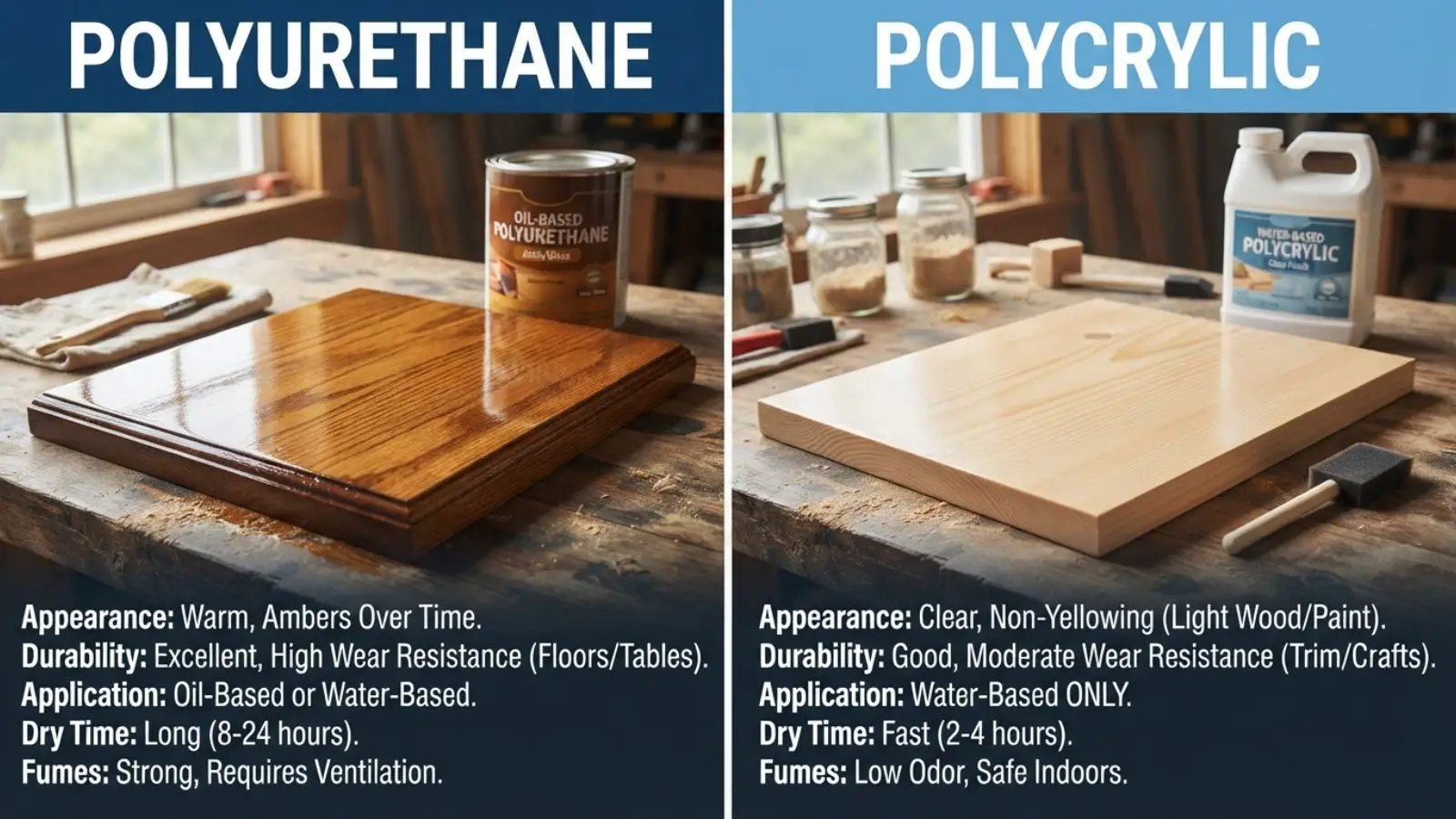
Polyurethane vs Polycrylic comes down to durability, appearance, and where you plan to use the finish.
Polycrylic is a fast-drying, water-based finish that stays clear and works well on interior furniture, cabinets, and light-colored wood.
Polyurethane generally provides stronger protection, especially for high-use surfaces such as tables and floors.
Key Takeaways:
- Polycrylic is water-based, dries clear, has low odor, and cleans up with soap and water.
- Polyurethane comes in water-based and oil-based formulas and generally offers stronger wear protection.
- Oil-based polyurethane adds a warm amber tone, while Polycrylic is designed to remain clear.
- Polycrylic is a good choice for light-colored wood and painted furniture where color change is a concern.
- For floors and heavily used surfaces, use a polyurethane product specifically intended for that application.
What Is the Difference Between Polyurethane and Polycrylic?
Polyurethane and Polycrylic are both protective clear finishes used over wood, stain, and some painted surfaces. They can make a project more resistant to everyday wear while adding a selected sheen, such as satin, semi-gloss, or gloss.
The biggest difference is that Polycrylic is a water-based acrylic finish, while polyurethane is available in both water-based and oil-based formulations. That distinction matters because the different polyurethane formulas can behave quite differently.
What Is Polyurethane?
Polyurethane is a hard protective coating commonly used on furniture, cabinets, doors, and flooring. Depending on the product, it can be water-based or oil-based.
Oil-based polyurethane is known for creating a durable finish and adding warmth to the appearance of wood. It can also develop an amber tone over time. Water-based polyurethane generally dries clearer and offers easier cleanup than traditional oil-based formulas.
What Is Polycrylic?
Polycrylic is a water-based protective finish commonly used for interior wood projects. Minwax describes its Polycrylic Protective Finish as a crystal-clear topcoat for projects such as woodwork, furniture, doors, and cabinets. It is designed to resist scratches, scuffs, spills, and dirt while remaining clear.
It also dries relatively quickly and can be cleaned from tools with soap and water.
Polyurethane vs Polycrylic: Side-by-Side Comparison
| Feature | Polycrylic | Polyurethane |
| Base | Water-based | Water-based or oil-based |
| Appearance | Crystal clear | Water-based: generally clear; oil-based: amber/warm |
| Durability | Good for suitable interior projects | Generally higher, depending on formula |
| Drying | Fast | Varies by formula |
| Cleanup | Soap and water | Water-based: soap/water; oil-based: solvent cleanup |
| Odor | Low | Usually higher with oil-based formulas |
| Light-colored wood | Excellent | Water-based is generally suitable |
| High-use surfaces | Limited compared with polyurethane | Strong choice with an appropriate product |
| Floors | Not recommended for standard Polycrylic | Floor-rated polyurethane is commonly used |
| Outdoor use | Standard Polycrylic is not intended for this | Requires an exterior-rated polyurethane/urethane product |
Minwax specifically lists its standard Polycrylic finish for interior applications and says it is not recommended for floors because high-traffic areas would require more frequent recoating.
Which Finish Is More Durable?
If durability is your main concern, polyurethane generally has the advantage, although the exact product matters.
Oil-based polyurethane is particularly well known for handling repeated wear, making it suitable for demanding surfaces such as floors and heavily used furniture. Water-based polyurethane can also provide substantial protection while offering a clearer appearance and easier cleanup.
Polycrylic still provides meaningful protection. Minwax states that its Polycrylic finish protects interior wood projects against scratches, scuffs, blemishes, spills, and dirt. The important point is to match the product to the amount of wear the project will receive.
For example, a decorative bookshelf may not need the same level of protection as a dining table that receives daily use.
Which One Looks Better on Wood?
Appearance is one area where the choice can be very noticeable.
Polycrylic dries crystal clear, making it useful when you want to preserve the color of light wood or painted surfaces. Minwax specifically describes it as non-yellowing and non-ambering.
Oil-based polyurethane, by contrast, can add a warm amber appearance. That warmth can complement darker or naturally warm wood, but it may be undesirable over white or very light paint.
Water-based polyurethane is another option when you want polyurethane’s protection without the stronger amber effect associated with traditional oil-based formulas. Minwax’s comparison guide identifies water-based oil-modified polyurethane as an interior finish that provides durability while using water-based cleanup.
Simple rule: If preserving a light color is the priority, start by considering Polycrylic or a clear water-based polyurethane.
Drying Time, Application, and Cleanup
Polycrylic is popular partly because it dries quickly. Minwax’s current instructions say its standard Polycrylic finish can be recoated after at least two hours, with three coats recommended. The manufacturer also specifies soap-and-water cleanup.
Its fast drying can also require more attention during application. Minwax recommends applying a thin coat with a high-quality synthetic-bristle brush, following the wood grain, and avoiding over-brushing.
Polyurethane drying times vary significantly by formula. Minwax lists four to six hours for recoating its Fast-Drying Polyurethane, while its water-based oil-modified polyurethane allows recoating after two hours.
Cleanup is another major difference. Water-based finishes clean up with soap and water, while traditional oil-based polyurethane requires a different cleanup process.
Polyurethane vs Polycrylic for Common Projects
For Furniture
Both can work for furniture, but the furniture’s expected use matters.
For a decorative cabinet, bookshelf, side table, or lightly used piece, Polycrylic can provide a clear protective layer without significantly changing the color.
To furniture that receives constant handling, abrasion, or spills, polyurethane may provide a more durable option.
For Table Tops
A tabletop usually experiences more wear than decorative furniture. Plates, glasses, spills, cleaning, and repeated contact can put considerable stress on the finish.
For that reason, polyurethane is generally the more appropriate choice for a heavily used tabletop, provided the selected product is intended for that application.
If the tabletop is white or very light, water-based polyurethane can offer a balance between durability and color preservation. Always test the finish on a sample first.
For Cabinets
Both finishes can be used on suitable interior cabinets.
Polycrylic is especially useful when maintaining the original color is important. Polyurethane may make more sense when the cabinets receive frequent handling and cleaning.
The manufacturer’s product instructions should always take priority over general rules because formulas differ between products.
Over White or Light Paint
This is one of Polycrylic’s strongest use cases.
Oil-based polyurethane can add an amber or yellowish appearance to white and light-colored surfaces. Polycrylic is designed to remain crystal clear and non-ambering, making it a popular option for painted furniture.
Water-based polyurethane is another option when you want polyurethane’s additional durability while minimizing color change.
For Hardwood Floors
Do not automatically choose standard Polycrylic for a floor.
Minwax specifically states that its Polycrylic Protective Finish is not recommended for floors, while its polyurethane products include formulations designed for flooring.
For a floor, choose a finish specifically labeled for flooring and follow its application and curing instructions.
For Outdoor Wood
Standard Polycrylic is intended for interior projects, so it should not be treated as a general outdoor finish.
Outdoor wood needs a coating designed to handle weather, moisture, temperature changes, and sunlight. For example, Minwax’s Helmsman Spar Urethane line is specifically formulated for interior and exterior use and includes protection against sunlight, water, and weather.
In other words, don’t choose a finish simply because it contains the word “poly.” Check whether the exact product is rated for outdoor use.
Water-Based Polyurethane vs Polycrylic
The comparison becomes more interesting when you are deciding between water-based polyurethane and Polycrylic.
Both can offer relatively clear finishes and water-based cleanup. However, polyurethane products are often selected when greater durability is important, while Polycrylic is attractive when fast drying and color clarity are major priorities.
For a light-colored decorative cabinet, Polycrylic can be a practical choice. For a frequently used desk or table where wear resistance matters more, a suitable water-based polyurethane may be worth considering.
Always compare the actual product labels rather than assuming every water-based polyurethane or every Polycrylic formula performs identically.
Common Mistakes to Avoid
Using oil-based polyurethane over white paint without testing: The amber tone can noticeably alter light colors.
Choosing standard Polycrylic for a floor: Minwax specifically does not recommend its standard Polycrylic Protective Finish for floors.
Applying Polycrylic too heavily: Its manufacturer recommends thin coats and warns against over-brushing.
Ignoring the exact product instructions: “Polyurethane” covers several formulas with different drying times, appearances, and intended uses.
Skipping a test area: A small test board can reveal unexpected color changes, adhesion issues, or application problems before you coat the entire project.
Frequently Asked Questions
Is polycrylic better than polyurethane?
Neither is universally better. Polycrylic is particularly useful when you want a clear, water-based finish for an interior project and want to preserve light colors. Polyurethane generally makes more sense when the project needs stronger wear protection. The right choice depends on the surface, environment, appearance, and expected use.
Is polycrylic yellow?
Standard Minwax Polycrylic Protective Finish is described by the manufacturer as non-yellowing and non-ambering. It is designed to dry crystal clear, which is why it is commonly used over light woods and light-colored surfaces.
Can you use polycrylic on a table?
You can use Polycrylic on appropriate interior furniture, but the amount of use matters. Minwax lists furniture and woodwork among its intended applications. For a heavily used dining table, however, choose a finish specifically suited to that level of wear rather than assuming standard Polycrylic is the best option.
Can polyurethane go over polycrylic?
Do not assume that any polyurethane can be applied over any Polycrylic product. Compatibility, surface preparation, and curing requirements matter. Follow the exact manufacturer’s instructions for both products and test the combination on an inconspicuous area before applying it to the entire project.
Final Takeaway:
The Polyurethane vs Polycrylic decision is really about matching the finish to the job.
Choose Polycrylic when you are working on an interior project and want a fast-drying, clear finish that preserves light colors.
It is particularly useful for furniture, cabinets, trim, and other suitable interior wood projects.
Choose polyurethane when the project needs stronger protection, especially when dealing with high-use furniture or a floor-rated application.
Water-based polyurethane can also be a useful option when you want durability without the stronger amber appearance associated with oil-based polyurethane.
Most importantly, compare the specific product label, not just the name on the can.
Formula, intended use, drying time, and application requirements can vary significantly.

I’m Maya Angelou, the creator behind EmojiAura.com, where I explore emoji meanings, social media trends, and fun digital expressions. I’m passionate about helping people understand the real meaning behind emojis and use them creatively in chats, captions, posts, and everyday online conversations.