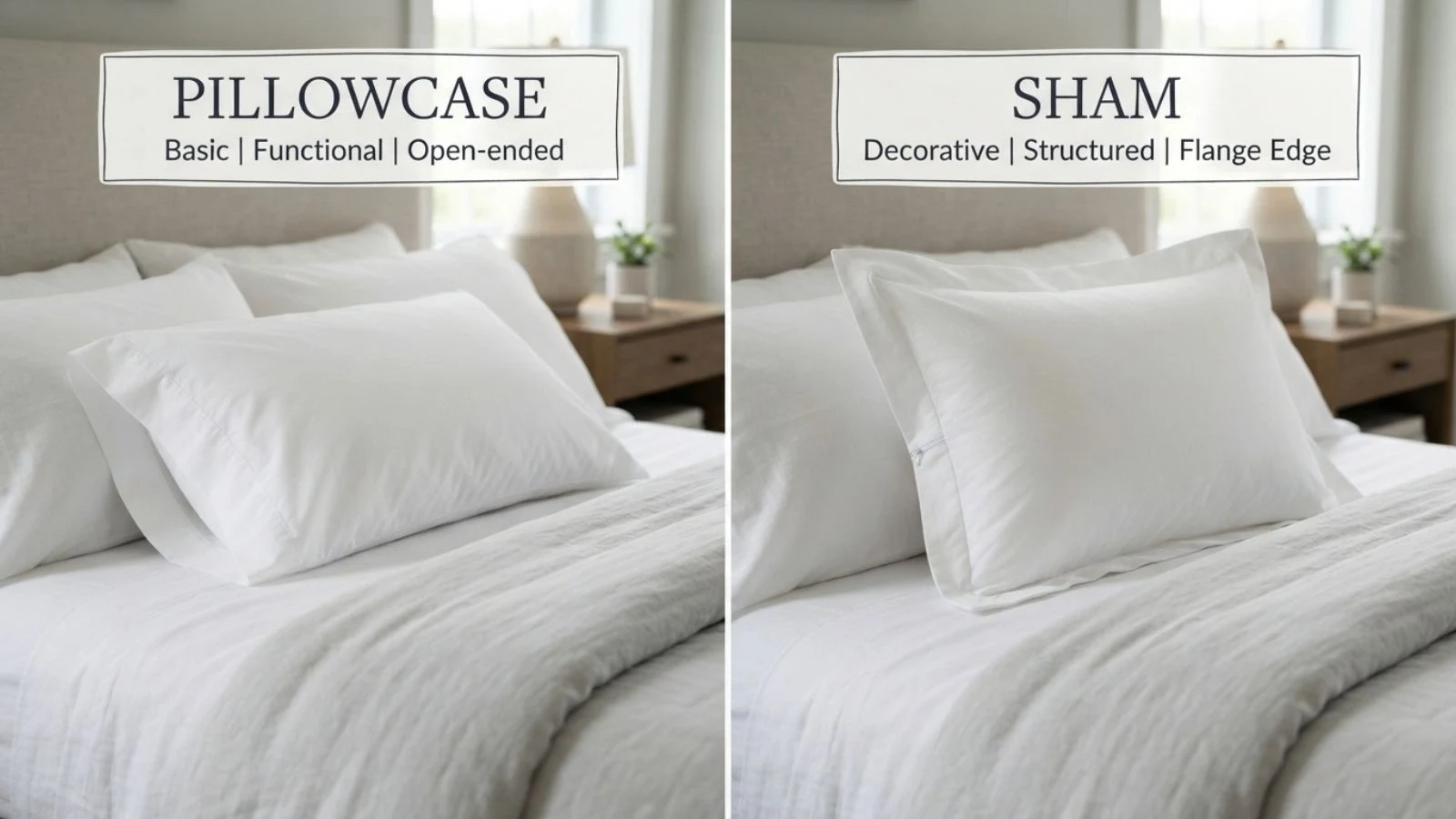
A pillowcase is a functional cover designed for the pillow you sleep on, while a pillow sham is mainly a decorative cover used to make a bed look polished and coordinated.
Pillowcases usually have an open end, while shams commonly open from the back and may have flanges, piping, or other decorative details.
Key Takeaways:
- A pillowcase is designed primarily for sleeping, comfort, and pillow protection.
- A pillow sham is mainly used to decorate and style a made bed.
- Pillowcases usually have an open end, while shams commonly have a hidden back opening.
- Shams often feature a flange, piping, embroidery, or other decorative details.
- You can use both: sleep on pillows covered with pillowcases and use shams for the decorative pillows.
- Standard, queen, and king shams generally correspond to similarly sized pillows, while Euro shams are square.
What Is the Difference Between a Sham and a Pillowcase?
The simplest way to understand sham vs pillowcase is to look at what each one is designed to do.
A pillowcase is the everyday cover for a sleeping pillow. It creates a soft surface for your head and helps keep the pillow itself cleaner by acting as a removable layer.
A pillow sham is primarily a decorative pillow cover. It is commonly used on a made bed to add color, texture, pattern, or a finished appearance. Its opening is usually hidden on the back instead of being obvious from the front.
| Feature | Pillowcase | Pillow Sham |
| Main purpose | Sleeping and protection | Decoration and styling |
| Typical opening | Open end | Back opening |
| Appearance | Simple or lightly decorated | Often decorative |
| Common details | Hem or cuff | Flange, piping, trim, embroidery |
| Sleeping use | Designed for regular sleep | Mainly intended for display |
| Typical placement | Sleeping pillow | Decorative or layered pillow |
| Washing | Frequent | Usually less frequent unless slept on |
The difference is not simply that one looks fancier. The construction reflects the intended use.
What Is a Pillowcase?
A pillowcase is a fabric covering that slips over a pillow used for sleeping. It is generally designed around comfort, easy removal, and regular washing.
Common pillowcase fabrics include cotton, percale, sateen, linen, and other materials selected for their feel and durability. The design is usually simple because the surface directly touches your face and head during sleep.
Some pillowcases have an envelope-style interior flap or decorative cuff, but they generally remain more streamlined than a sham.
What Is a Pillow Sham?
A pillow sham is a removable decorative cover that gives a pillow a more finished appearance. Shams often coordinate with quilts, duvet covers, comforters, or other bedding.
Many have a flange, which is a fabric border around the pillow. Others use piping, embroidery, textured fabrics, or a clean knife-edge design. The pillow normally enters through the back, often using an overlapping envelope closure or hidden zipper.
This construction helps hide the opening and keeps the front of the sham looking neat when the bed is made.
Sham vs Pillowcase: Key Differences
The biggest difference between a sham and pillowcase is function.
A pillowcase is meant to be used every night. A sham is generally meant to make the bed look more attractive during the day.
That difference affects several other features.
Purpose: Pillowcases prioritize sleep comfort and pillow protection. Shams prioritize appearance and bed styling.
Opening: A pillowcase commonly has an open end. A sham usually has an opening on the back, where the fabric overlaps or closes with another mechanism.
Design: Pillowcases tend to have plain hems or cuffs. Shams may have wide borders, piping, embroidery, quilting, or other decorative features.
Fabric: Pillowcases are commonly made from fabrics selected for direct skin contact. Shams can use more structured, textured, or decorative materials.
Placement: Pillowcases stay on sleeping pillows. Shams are commonly placed on pillows that are arranged for display.
So, if you’re deciding what to put under your head at night, choose a pillowcase. If you’re arranging pillows to create a finished-looking bed, a sham can be useful.
How Pillow Shams and Pillowcases Are Designed
The physical construction is one of the easiest ways to tell them apart.
Open-End Pillowcases
A traditional pillowcase usually has one end where the pillow is inserted. Some designs include a cuff or an internal flap that helps keep the pillow from sliding out.
Because the opening is designed for frequent access, changing a pillowcase is usually quick and convenient.
Back-Opening Pillow Shams
A sham commonly opens from the back. An overlapping piece of fabric can conceal the pillow opening, creating a smooth front when the sham is displayed.
Some modern shams use a zipper or buttons instead. The exact construction varies by manufacturer and design.
Flanges, Piping, and Decorative Details
A flange is a flat border that extends around the edges of a sham. It can make the pillow appear larger and more structured.
Other shams use piping, ruffles, embroidery, quilted patterns, or a simple knife-edge finish. These details are useful for decoration but aren’t necessarily ideal for sleeping directly against.
Sham vs Pillowcase Sizes
One common shopping mistake is assuming that the bed size determines the pillowcase or sham size.
The better approach is to match the cover to the pillow dimensions. Common U.S. pillow sizes include standard, queen, king, and Euro.
| Pillow/Cover Size | Approx. Pillow Dimensions | Typical Use |
| Standard | 20 × 26 in. | Sleeping or decorative |
| Queen | 20 × 30 in. | Sleeping or decorative |
| King | 20 × 36 in. | Sleeping or decorative |
| Euro | 26 × 26 in. | Mostly decorative |
Standard, queen, and king shams are generally made for their corresponding rectangular pillow sizes. Euro shams are square and are commonly used as a decorative layer against a headboard.
Actual finished measurements can vary between brands, so checking the product dimensions is smart before buying a replacement cover.
Can You Sleep on a Pillow Sham?
Yes, you technically can, but a sham is not usually the most practical choice for nightly sleeping.
Some shams are made from soft materials and may feel comfortable enough. However, decorative borders, piping, embroidery, thicker fabrics, or back closures can create seams or raised areas that aren’t as comfortable as a purpose-made pillowcase.
A pillowcase is generally designed specifically for regular skin contact and frequent washing. A sham is designed primarily to look good on a made bed.
If you like the appearance of a sham but want a comfortable sleeping surface, use the sham for display and keep a regular pillowcase on the pillow you sleep on.
Do You Put a Pillowcase Inside a Sham?
Usually, no.
A sham is itself a pillow cover. You normally put the pillow directly inside the sham when using it as a decorative pillow.
For nighttime use, a common setup is to have separate sleeping pillows in pillowcases and decorative pillows in shams. The decorative shams can then be removed or moved aside when it’s time to sleep.
This is different from putting a pillowcase inside a sham as a required layer. The two products have different jobs rather than being two mandatory layers of the same pillow.
When Should You Use a Pillowcase or a Sham?
Choose a pillowcase when:
- You sleep directly on the pillow.
- You want a soft, skin-friendly surface.
- You change your bedding regularly.
- You need a practical everyday pillow cover.
- You want easy removal for washing.
Choose a pillow sham when:
- You want a more decorative bed.
- You’re layering pillows for a finished appearance.
- You want bedding that coordinates with a quilt or duvet.
- You’re creating a hotel-style or styled bedroom look.
- The pillow will mainly be used as decoration.
For many bedrooms, the answer isn’t really sham vs pillowcase. It’s a sham and pillowcase because they perform different functions.
Are Pillow Shams Necessary?
No. Pillow shams are optional decorative bedding.
You can have a completely functional bed with sleeping pillows and pillowcases alone. Shams become useful when you want additional visual layers, patterns, textures, or coordinated bedding.
A simple bedroom might use only pillowcases. A more decorative setup might place Euro shams at the back, standard or king shams in front, and sleeping pillows toward the front or center.
The choice is mainly about how you want the bed to look and how much time you want to spend arranging it.
Frequently Asked Questions
Are shams and pillowcases the same thing?
No. Both are removable pillow covers, but their main purposes are different. A pillowcase is designed for sleeping and regular use, while a sham is primarily decorative. Shams commonly have hidden back openings and decorative borders, whereas pillowcases are usually simpler and open at one end.
Can you use a sham as a pillowcase?
You can physically put your head on a sham, but it may not be the most comfortable choice for regular sleeping. Decorative borders, seams, closures, or textured materials can make some shams less suitable for direct skin contact. A standard pillowcase is generally the more practical option for nightly use.
What pillow goes inside a sham?
The pillow should match the sham’s listed size. Common options include standard, queen, king, and Euro pillows. A standard sham typically corresponds to a 20 × 26-inch pillow, a queen sham to about 20 × 30 inches, a king sham to about 20 × 36 inches, and a Euro sham to a square pillow around 26 × 26 inches. Always check the manufacturer’s measurements because sizing can vary.
Do you need both pillowcases and shams?
You don’t need both, but many people use both because they serve different purposes. Pillowcases provide the practical sleeping surface, while shams add decorative style to the bed. If comfort and simplicity are your priority, pillowcases alone are enough. If you want a layered, coordinated bed, adding shams can complete the look.
Final Takeaway:
The Sham vs Pillowcase difference comes down to purpose. A pillowcase is the practical cover you sleep on, while a pillow sham is mainly a decorative cover designed to make your bed look finished.
Pillowcases generally focus on comfort, easy changing, and regular washing. Shams focus on presentation, with features such as hidden back openings, flanges, piping, embroidery, or coordinated fabrics.
If you’re buying bedding for everyday sleep, start with the correct pillowcase size. If you’re styling your bedroom, consider adding matching or contrasting shams.
And if you want both comfort and decoration, using pillowcases on your sleeping pillows and shams on display pillows gives you both functions without confusing their roles.

I’m Maya Angelou, the creator behind EmojiAura.com, where I explore emoji meanings, social media trends, and fun digital expressions. I’m passionate about helping people understand the real meaning behind emojis and use them creatively in chats, captions, posts, and everyday online conversations.